Lamacoid or sticker? You can tell from across the room
A printed label and an engraved tag look the same on day one. Give them a few years in a panel room and you can see the difference from the doorway.
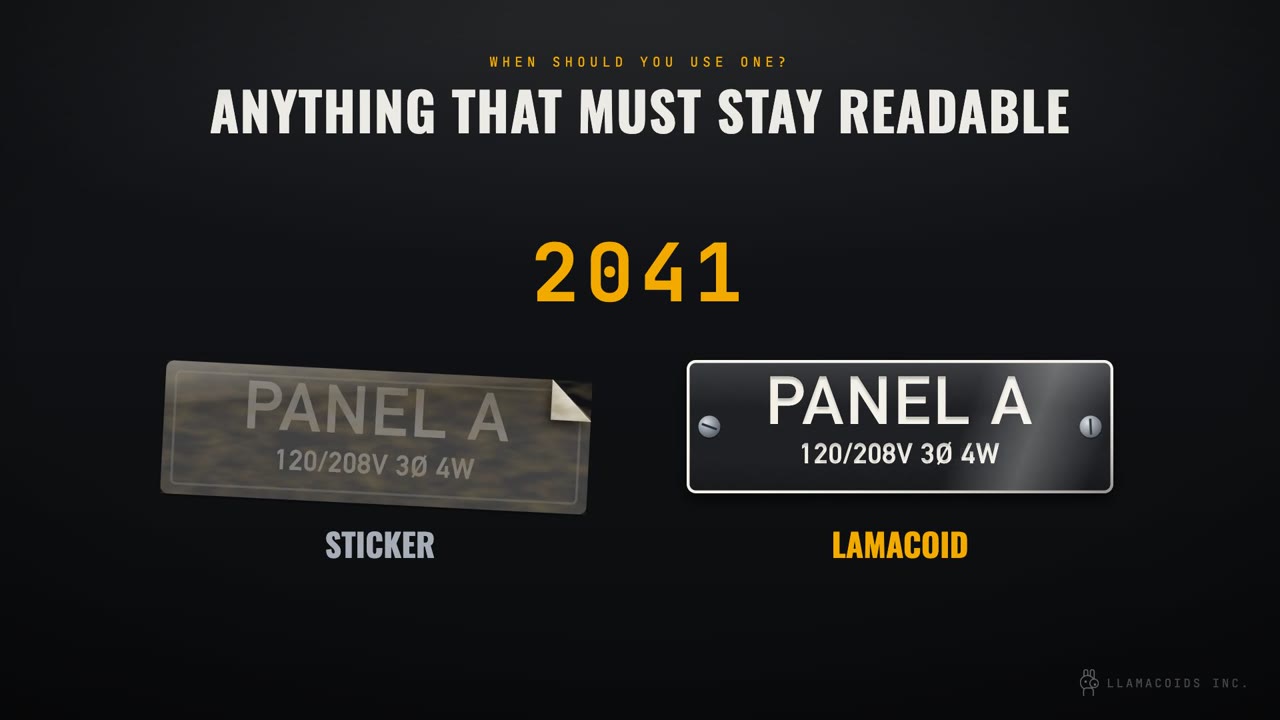
Every week someone asks if they can just print labels for a panel. Sometimes they can. For anything that has to stay readable for the life of the equipment, I’d put an engraved lamacoid on it. Here’s the short version of why.
What a lamacoid actually is
A lamacoid (also spelled lamicoid) is a small plate made from layered plastic, usually phenolic. The top layer is one colour and the core is another. The engraver cuts through the top layer, and the letters you read are the core colour showing through.
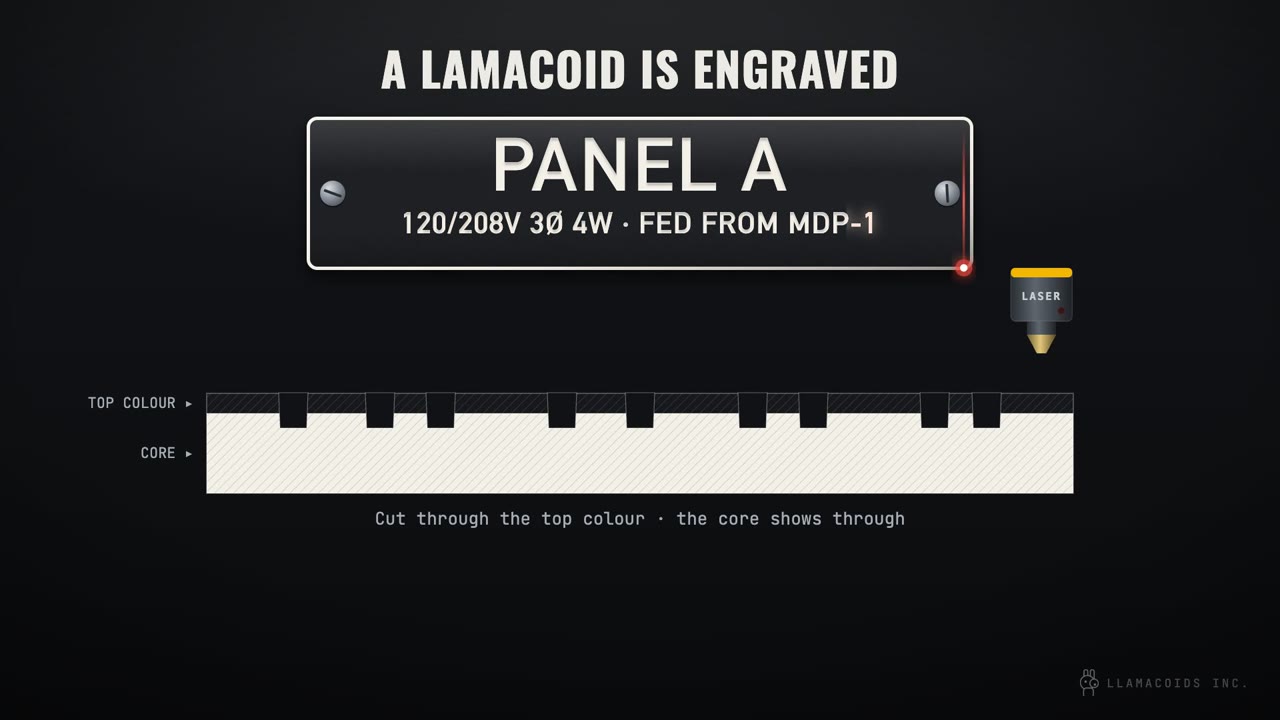
There’s no ink on it. Nothing sits on the surface that can peel, fade or wipe off. The text is a groove in the material.
Where stickers give out
- Sunlight. Printed ink fades, and UV is hard on most label stock.
- Solvents and oil. One wipe-down with cleaner can take the print with it.
- Heat. The adhesive softens, an edge lifts, and eventually the label is sitting in the bottom of the enclosure.
- Hands. Labels beside a switch get rubbed every time someone reaches for it.
In a clean office a good printed label can last a long time. In a mechanical room, a plant, or anywhere outdoors, they usually don’t.
| Printed label | Engraved lamacoid | |
|---|---|---|
| Fading in sunlight | Poor | Excellent |
| Solvents and oil | Poor | Excellent |
| Heat | Adhesive fails | Doesn’t melt |
| Peeling off | Yes, eventually | None when screwed on |
| Life in a tough spot | 1–5 years | 10–30+ years |
| Code acceptance | Often rejected | Accepted |
| Cost | Lower up front | Higher up front, lower over its life |
The code side
A lot of electrical identification has to be permanent and legible. That wording shows up in the requirements for solar PV systems (CEC Section 64), EV charging (Section 86), and arc flash labelling under CSA Z462. Inspectors see plenty of printed stickers, and they often reject them for exactly that reason.
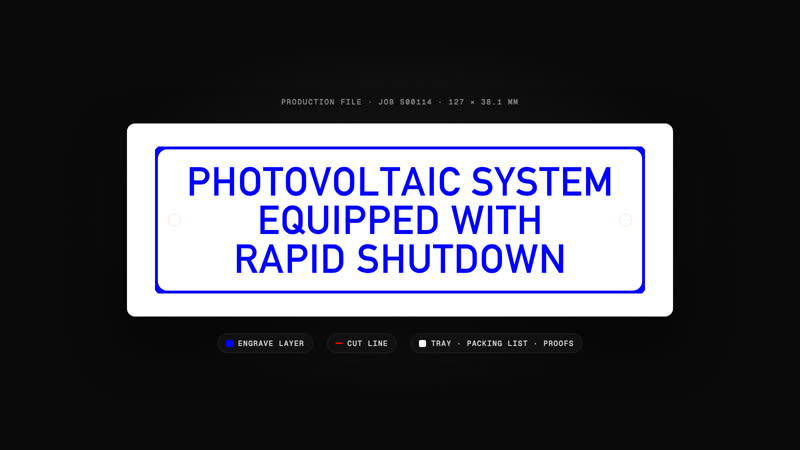
Colour can matter too. Solar disconnects call for red with white lettering. If the spec says red/white, “close enough” doesn’t pass.
If a tag has to outlast the equipment it’s on, cut it. Don’t print it.
The 30-second version
I made a short video that shows the difference. Sound on.
How to order them so they go on fast
- Send the text as a list. A spreadsheet with one row per tag is ideal.
- Pick colours. Black/white is the standard for general electrical ID. Red/white for solar and other safety-critical items.
- Say how it mounts. Adhesive for clean, flat indoor panels. Drilled holes for screws or rivets anywhere hot, wet or oily.
- Give a size, or the space you have. A typical panel tag is around 1″ × 3″.
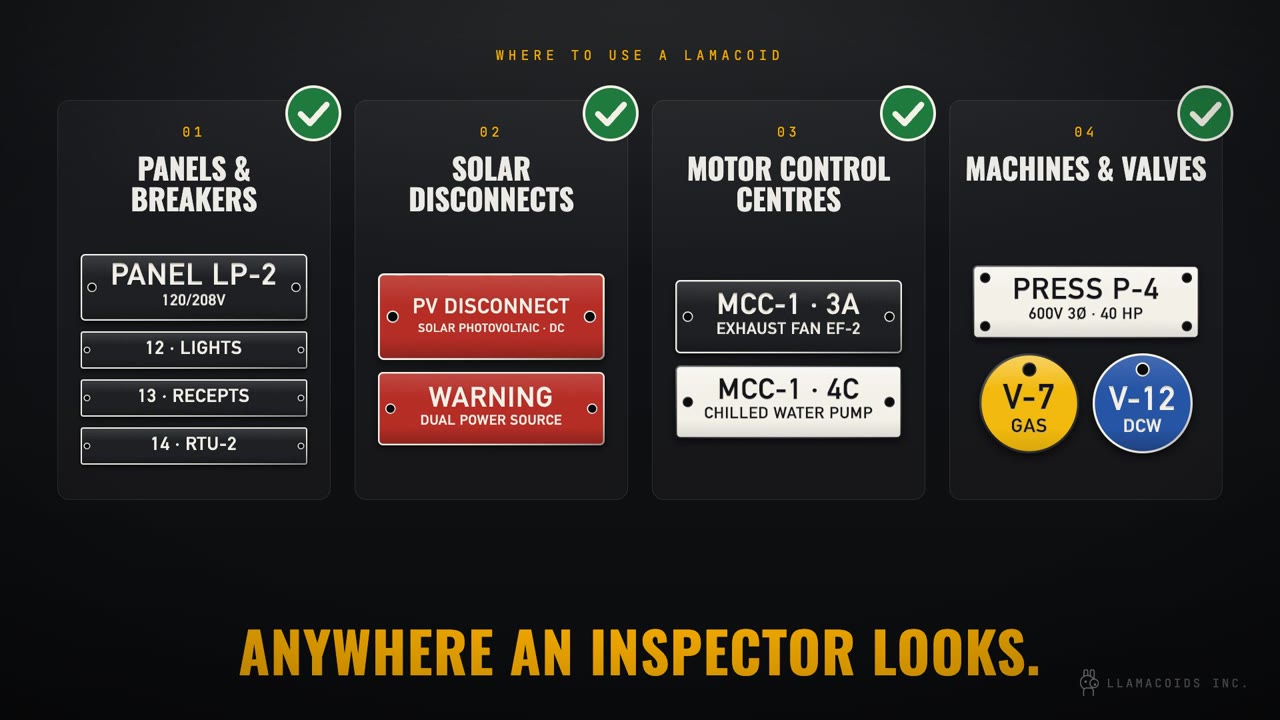
We engrave in Burlington, turn most orders around the same day, and ship anywhere in Canada. Send a list for a quote at www.llamacoids.ca or call 289-275-9572.